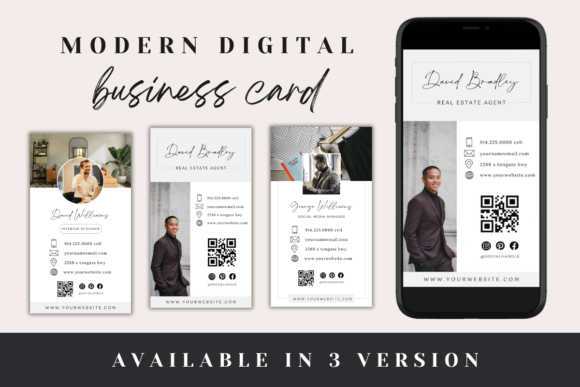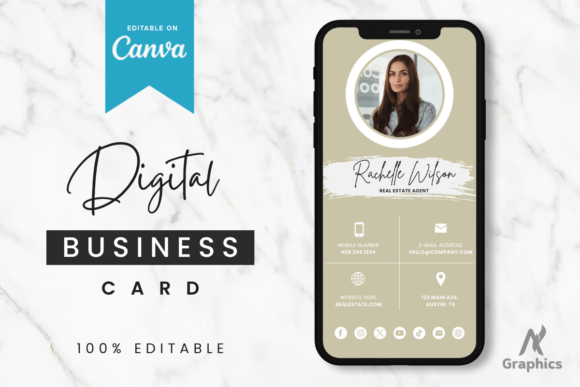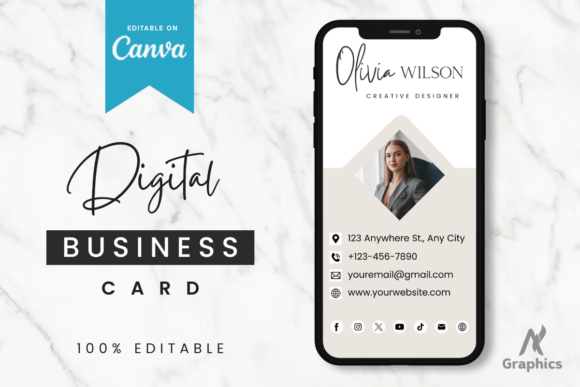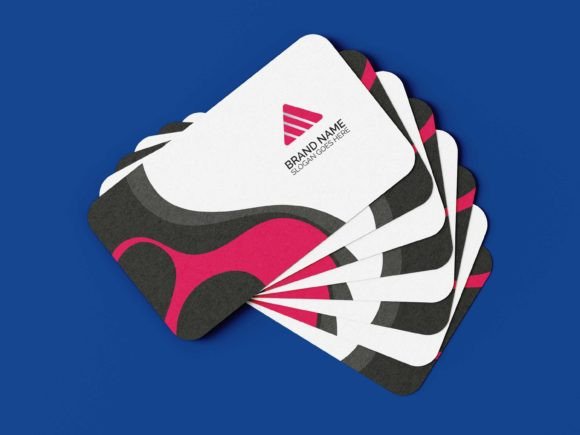
Office Business Card
In the modern professional landscape, first impressions are often formed before a handshake is exchanged. The business card remains a critical touchpoint for networking, client acquisition, and brand reinforcement. For professionals seeking a design that balances corporate authority with contemporary aesthetics, the Office Business Card template offers a structured solution. This resource is designed for users who require a polished, editable, and print-ready identity without the need to commission a custom graphic designer from scratch.
This evaluation explores the features, technical specifications, and practical applications of the Office Business Card template. By examining its compatibility with industry-standard software, file organization, and design flexibility, readers can determine whether this asset aligns with their specific branding needs and workflow requirements.
Understanding the Office Business Card Template
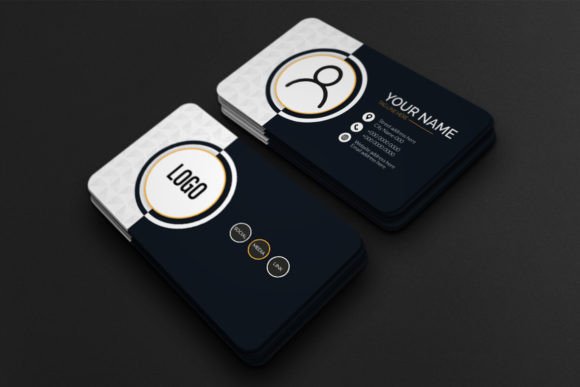
The Office Business Card is not merely a static image; it is a comprehensive design kit intended for customization. It serves as a foundational layout that allows users to insert their own contact information, logos, and color schemes while maintaining a cohesive and professional visual structure. The template is built on the principles of clean typography and balanced whitespace, ensuring that the card communicates credibility and efficiency.
One of the primary value propositions of this template is its dual-format availability. It is fully compatible with both Adobe Photoshop and Adobe Illustrator. This versatility caters to different user preferences and skill sets. Designers who prefer pixel-based editing or raster effects may utilize the Photoshop files, while those focused on vector precision, scalability, and typographic control can leverage the Illustrator files. This dual support ensures that the template is accessible to a broader range of creative professionals.
Technical Specifications and File Structure
For any print project, technical accuracy is paramount. A design that looks good on screen may fail in production if color profiles, resolution, or bleed settings are incorrect. The Office Business Card addresses these common pitfalls by providing pre-configured settings that meet industry printing standards.
Print-Ready Standards
The template adheres to strict print specifications to ensure high-quality output:
- Color Mode: CMYK (Cyan, Magenta, Yellow, Key/Black). This is the standard color model for professional printing, ensuring that colors appear accurately on paper rather than shifting unexpectedly due to RGB-to-CMYK conversion errors.
- Resolution: 300 DPI (Dots Per Inch). This resolution provides the necessary detail for crisp text and sharp graphics, preventing pixelation when the card is printed at full size.
- Dimensions: Standard US size of 3.5 x 2 inches, with an alternative format of 2 x 3.5 inches. These dimensions comply with standard mailing envelopes and wallet slots, ensuring usability.
- Bleeds: The files include proper bleed areas. Bleed refers to the extra space around the edge of the design that gets trimmed off during cutting. Including bleeds prevents white edges from appearing if the cut is slightly off-center.
File Organization and Assets
The download package is organized to streamline the customization process. Users receive a ZIP archive containing multiple file types, each serving a specific purpose:
- Adobe Illustrator (AI) Files: These files contain vector shapes and editable text layers. Vector graphics are infinitely scalable, meaning they can be resized without losing quality. This is particularly useful for creating larger marketing materials from the same core design elements.
- Adobe Photoshop (PSD) Files: These raster-based files allow for detailed photo manipulation and complex layer effects. They are ideal for users who want to apply textures or photographic backgrounds to their cards.
- IDML Files: InDesign Markup Language files are included. This allows users to open the template in Adobe InDesign, which is advantageous for managing multi-page documents or integrating the card design into a larger brand book.
- Vector EPS Files: Encapsulated PostScript files provide another vector format option, ensuring compatibility with older software versions or other design tools that may not support the latest AI formats.
- JPG Previews: Three separated JPG files are provided, offering quick visual references of the front and back designs without needing to open heavy design software.
Customization and Ease of Use
A significant barrier to entry for many non-designers is the complexity of professional design software. The Office Business Card mitigates this through thoughtful structural choices.
Layer Management and Styles
The template utilizes separate layers for different design elements. This means that background images, text boxes, logo placeholders, and decorative lines are isolated from one another. Users can hide, move, or delete individual components without affecting the rest of the design. Furthermore, the inclusion of paragraph styles simplifies text formatting. Instead of manually adjusting font size, leading, and tracking for every line of text, users can apply predefined styles that maintain consistency across the card.
Font Accessibility
Typography plays a crucial role in the "Office" aesthetic. However, using licensed fonts can lead to legal issues or unexpected costs. To address this, the template includes links to free fonts. This ensures that users can replicate the design exactly as intended without purchasing additional licenses. When opening the files, users should verify that these fonts are installed on their system to avoid substitution warnings.
Evaluating Fit: Who Should Use This Template?
While the Office Business Card is a robust tool, it is not a universal solution. Understanding its strengths and limitations helps in making an informed decision.
Ideal Scenarios
This template is particularly well-suited for:
- Corporate Professionals: Lawyers, accountants, consultants, and executives who need a conservative yet modern look that instills trust.
- Small Business Owners: Entrepreneurs who need a cost-effective way to generate large quantities of branded materials quickly.
- Marketing Teams: Internal teams who need to update employee details frequently. The easy-editable nature of the file allows for rapid turnaround times when staff changes occur.
- Design Students and Juniors: Individuals learning Adobe software who want to study how a professional layout is constructed using layers and styles.
Considerations and Tradeoffs
Users should consider the following factors before purchasing or downloading:
- Software Requirements: While the template is versatile, it requires access to Adobe Creative Cloud applications (Photoshop, Illustrator, or InDesign). Users relying on free alternatives like GIMP or Inkscape may face compatibility issues, although EPS and IDML files offer some cross-platform potential.
- Uniqueness: Because templates are available to multiple users, there is a risk that your card may look similar to others in your industry. If distinctiveness is the primary goal, this template may serve only as a starting point for more extensive custom work.
- Learning Curve: Although the layers are organized, editing vector files in Illustrator still requires a basic understanding of the software interface. Complete novices might find the PSD version more approachable for simple text swaps.
Conclusion
The Office Business Card template represents a practical intersection of design quality and user convenience. By providing print-ready CMYK files, proper bleeds, and organized layers in both AI and PSD formats, it removes much of the technical friction associated with creating professional stationery.
For individuals and businesses prioritizing efficiency, cost-effectiveness, and a clean corporate aesthetic, this template is a strong candidate. It empowers users to present themselves stylishly and professionally without the overhead of hiring external design services. However, those requiring highly unique, bespoke branding or lacking access to Adobe software may need to explore alternative solutions or invest time in learning the required tools.
Ultimately, the decision to use the Office Business Card depends on your specific balance between customization needs, technical proficiency, and budget. When evaluated against the criteria of print readiness, ease of editing, and professional appearance, it stands out as a reliable resource for modern networking needs.